Serving robot · Jetson AGX Orin · Simulation
7× higher task success rate
Task success · 100 simulated trials
Baseline: 9%ZETIC optimized: 63%
The player could not load here. Open the video
The inference company for Physical AI
Hardware-aware execution design for robots,
integrated into your existing stack.
The player could not load here.Open the video ↗
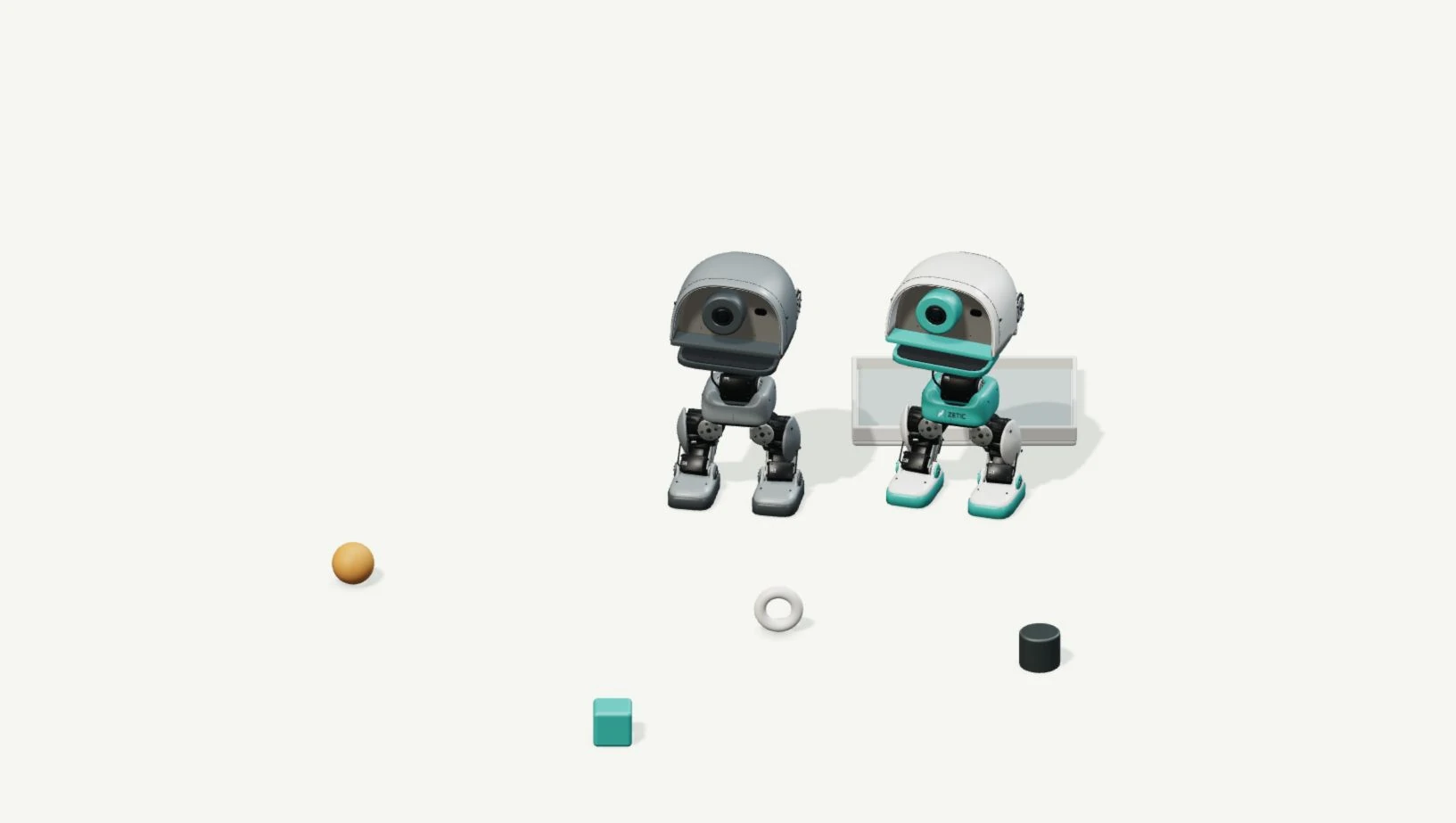
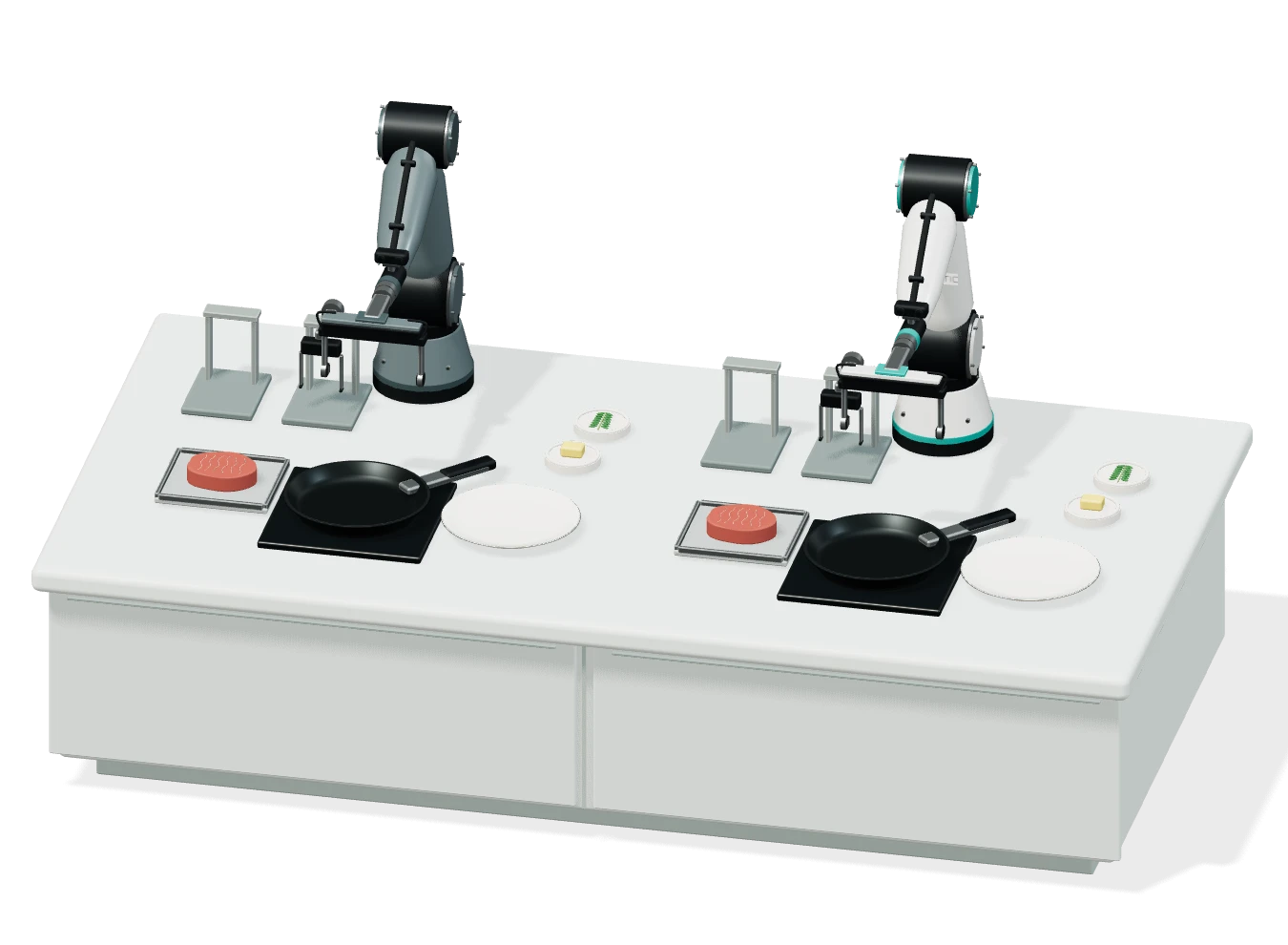
Loading cooking demo…
The interactive scene couldn’t load.
Click an object to start.
Interactive demos are available on desktop.




Recorded comparisons
Compare task outcomes and inference performance, with the baseline and measurement conditions for each recording.
Serving robot · Jetson AGX Orin · Simulation
Baseline: 9%ZETIC optimized: 63%
The player could not load here. Open the video
π0.5 · Jetson AGX Thor · PyTorch eager baseline
Baseline: 253.7 msZETIC optimized: 26.08 ms
The player could not load here. Open the video
YOLO26m · Jetson AGX Orin · TensorRT INT8 baseline, detection head FP16
Baseline: 4.83 msZETIC optimized: 2.99 ms
The player could not load here. Open the video
Sonata (PTv3) · Jetson AGX Thor · Stock PyTorch baseline
Baseline: 715 msZETIC optimized: 31 ms
The player could not load here. Open the video
Isaac-0.2-2B + SAM2 · Jetson Thor · FP16 full-generation baseline
Baseline: 3.16 sZETIC optimized: 0.30 s
The player could not load here. Open the video
C-Fast-FoundationStereo · Jetson AGX Thor · Stock PyTorch baseline
Baseline: 104 msZETIC optimized: 38 ms
The player could not load here. Open the video
The value of better execution
Successful trials out of 100Apple-to-plate task · Simulation
Python eager
Execution design
Cosmos-Reason2-2B, GR00T N1.6, and gear_wbc on Jetson AGX Orin. View test details
Show how better task success could lower their cost per completed task.
Same operating assumptions for both configurations. Uses the demo’s simulated success rates.
Use 1–10,000 tasks/hour and an hourly cost from $0.01 to $100,000.
86% lower modeled cost per successful task
4.531.5
Include software, support, labor, hardware and energy in the hourly cost. No energy savings assumed.
Tasks/hour includes successful and unsuccessful tasks. Successful tasks/hour = tasks/hour × demo success rate. Cost/successful task = hourly operating cost ÷ successful tasks/hour. Results use your assumptions and the simulated success rates above; they are not measured physical-robot throughput, ZETIC pricing, or investment ROI.
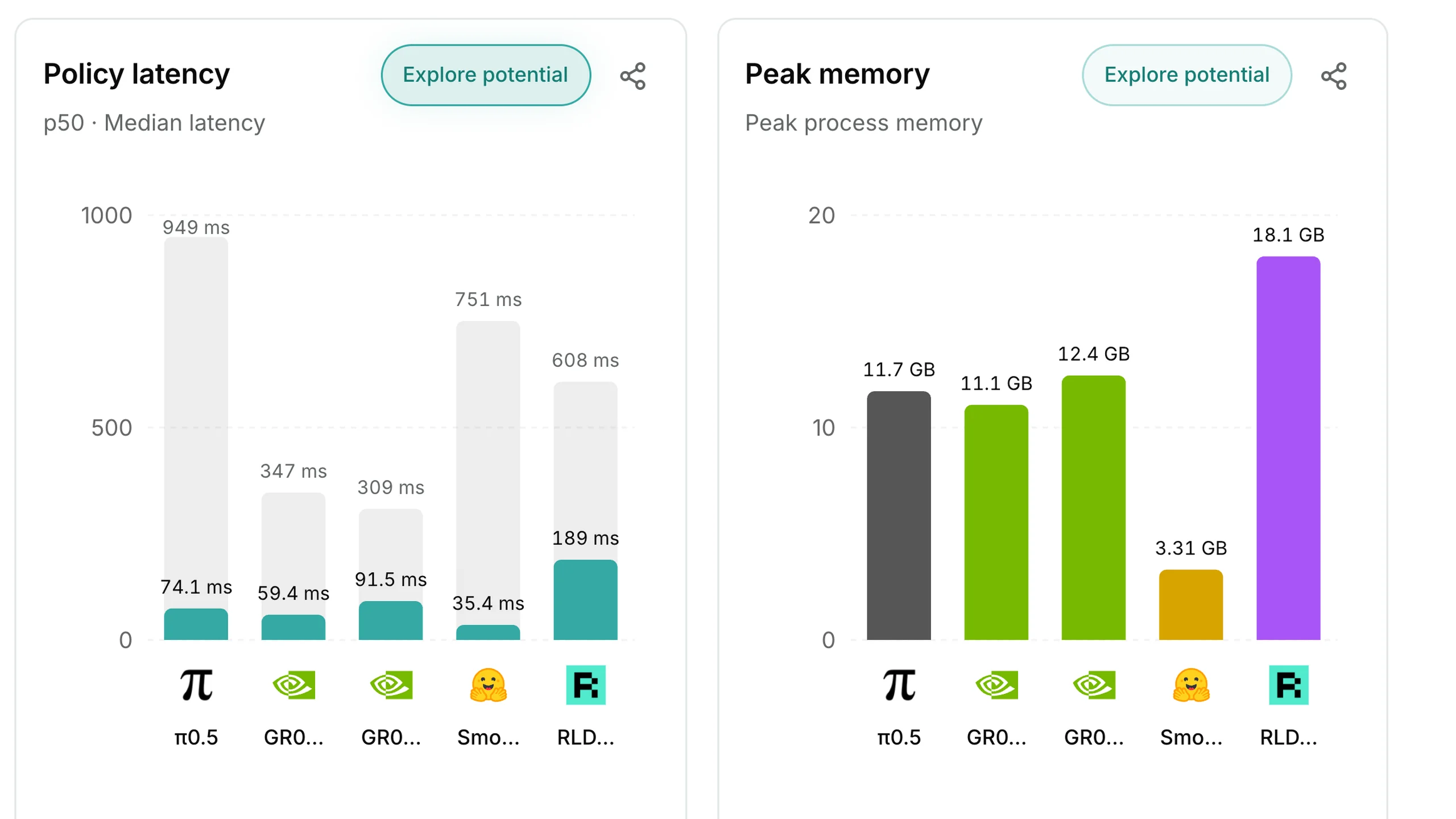
ixian-benchPhysical AI benchmarks
Compare models, hardware, and execution paths. Understand the trade-offs in latency, quality, memory, and energy use.
Execution design
We design how your models run and work together around your hardware and task.
Reshape model graphs, tune precision, and rewrite kernels for your target hardware.
Plan memory, state, and model scheduling around the work your robot needs to do.
Evaluate latency, energy, and output quality against the task criteria that matter to you.
Built around your workload
Your performance and quality goals.
Optimize response time, energy use, and memory for your workload.
Improve performance on your current board, or compare supported alternatives before buying.
Measured results and an integration package, so your team can focus on the robot.
After the required inputs and scope are confirmed.For supported models and boards. New architectures and boards typically take about one week.
Why ZETIC
We bring AI into products that run on real hardware. Today, our focus is robotics and Physical AI, built on our work in mobile and embedded inference.
Customer experience
“We were impressed by the rapid compatibility validation across our target devices. The quality and reliability of the provided results were excellent.”
Programs & recognition

Before we get started
Yes. TensorRT can remain the backend while ZETIC optimizes your workload. We agree on the execution path and delivery format for your application.
In our Isaac-0.2-2B + SAM2 demo on Jetson Thor, typical prompt-response time fell from ~1.5 s to 0.30 s — about 5× faster, with TensorRT retained.
Watch the TensorRT-based comparisonNo. ROS 2 is an optional packaging choice for teams that use it. We adapt delivery to your application’s runtime and integration requirements.
Yes. We can provide a C/C++ library for your application without a ROS 2 wrapper. The interface and dependencies are agreed during scoping.
Each demo names its reference baseline and measurement conditions. A speedup against PyTorch is not a speedup against TensorRT. For your project, we agree on a relevant baseline, including your tuned TensorRT implementation when applicable.
Your model, target hardware configuration, and performance and quality goals. We confirm the scope and any validation inputs needed before work starts.
Optimized execution for your workload, before/after measurements, and integration into your runtime. Delivery can include a C/C++ library, ROS 2 package, or an integration tailored to your stack.
For supported models and boards, two days after the required inputs and scope are confirmed. New architectures and boards typically take about one week.
Yes. We compare supported candidates against your workload’s performance and quality requirements, so you can evaluate the options before buying each board.
Inference runs on the device. Conversion, optimization, and benchmarking can use ZETIC infrastructure before deployment. Runtime routing, where supported, selects compatible execution paths on the target device.
Robotics projects start with supported NVIDIA Jetson and Qualcomm configurations, with coverage expanding. Compatibility is confirmed for the model, board, and runtime. For iOS and Android apps, Melange provides device benchmarking and SDK integration.
Explore MelangeThe updated model is converted, optimized, and validated for its version and target hardware. Performance and output quality are checked again against the agreed criteria.
Start with your workload
Tell us what you’re building, the model you’re running, and where performance is holding you back.
We’ll review your model, hardware, and goals with you to define the scope.
contact@zetic.aiAllow optional analytics and masked session replays? Your inquiry details are excluded.